
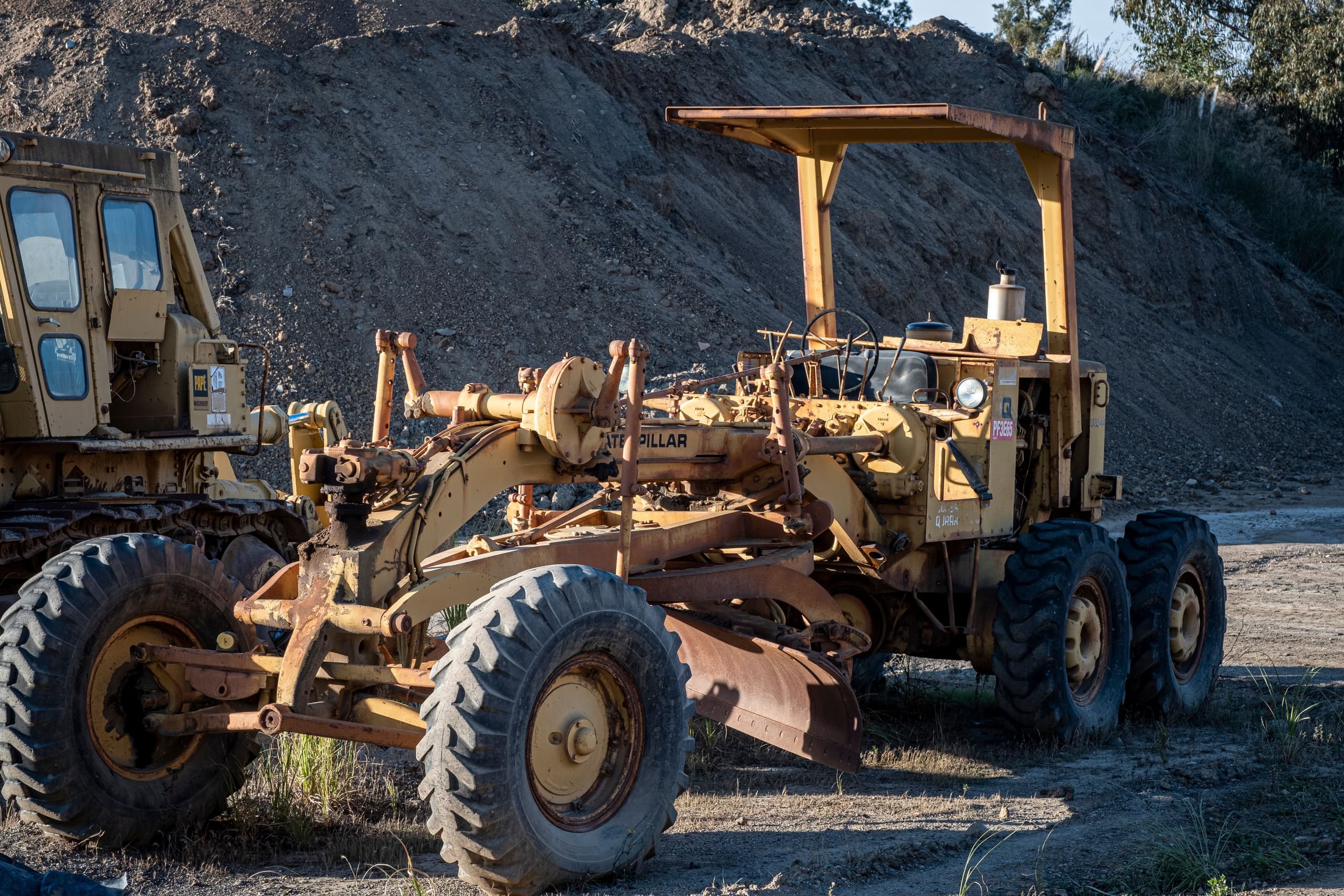
Why Choosing the Right Grader Tire Matters for Gravel Road Maintenance
Motor graders are the backbone of gravel road maintenance, but the tires they run on often determine how efficiently and economically that work gets done. The wrong tire choice can lead to rapid wear, poor traction, and frequent replacements—driving up costs and downtime. With so many tread patterns and constructions available, it's critical to understand how each option performs specifically on gravel roads.
In this comparison, we pit three popular agricultural-derived tread patterns—R-1, R-2, and CR-1—against each other for motor grader use on gravel roads. While these patterns are traditionally found on tractors, their deep lugs and durable compounds make them viable contenders for light-duty grading and maintenance applications. We'll analyze motor grader tire wear gravel roads conditions, compare grader tire wear patterns, and provide actionable recommendations to maximize motor grader tire life.
Overview of the Contenders: R-1, R-2, and CR-1 Tread Patterns
R-1 (SH111/R-1): The Standard Agricultural Drive Tire
The R-1 pattern is the most common agricultural drive tire, featuring a deep, angled lug design. The SH111/R-1 from Vannova is engineered for tractor drive wheels, offering good traction, wear resistance, and self-cleaning ability. It performs well in on-land operations and short-distance transportation. Its 45-degree lug angle provides a balance between traction and road wear, making it a reasonable choice for graders that spend time on gravel and unpaved surfaces.
R-2 (SH121/R-2): The Deep-Tread Specialist
The R-2 pattern (SH121/R-2) is designed for paddy-to-dry conversion conditions and irrigation farming. It features an even deeper tread than R-1, providing superior traction and self-cleaning in wet, muddy, or loose conditions. The R-2's aggressive lugs excel in soft ground, but on abrasive gravel roads, the taller lugs can lead to faster wear due to increased flexing and heat buildup. However, its excellent resistance to weathering and aging makes it durable in harsh environments.
CR-1 (SH101/CR-1): The Paddy-Optimized Hybrid
The CR-1 pattern (SH101/CR-1) is converted from the R-1 wet paddy field pattern, tailored for paddy field conditions. It retains the deep tread for traction and self-cleaning, with a design that emphasizes flotation and mud evacuation. While not specifically designed for gravel, its robust construction and weathering resistance can make it suitable for mixed-use scenarios where occasional gravel road grading is required.
Head-to-Head Comparison: Key Specifications and Performance Metrics
| Feature | R-1 (SH111/R-1) | R-2 (SH121/R-2) | CR-1 (SH101/CR-1) |
|---|---|---|---|
| Tread Depth | Deep | Very Deep | Deep |
| Lug Angle | 45° | 23° | 45° |
| Self-Cleaning | Good | Excellent | Good |
| Traction on Gravel | Good | Very Good | Good |
| Wear Resistance on Abrasive Surfaces | Very Good | Fair | Good |
| Weathering Resistance | Excellent | Excellent | Excellent |
| Typical Applications | On-land, short transport | Paddy-to-dry, irrigation | Paddy fields, wet conditions |
| Pros | Balanced performance, durable | Maximum traction in soft soil | Good flotation, mud evacuation |
| Cons | Not optimized for extreme mud | Faster wear on gravel | Less suited for dry gravel |
Performance Differences in Gravel Road Applications
Traction and Flotation
On gravel roads, traction is essential for maintaining grade and preventing wheel spin. The R-2's very deep tread and 23-degree lug angle provide the highest traction in loose gravel and soft shoulders, but this comes at the cost of increased rolling resistance and faster wear. The R-1 offers a good balance, with enough traction for most grading tasks without excessive wear. The CR-1, while capable, is designed more for flotation in wet conditions; on dry gravel, its traction is comparable to R-1 but with slightly less wear resistance.
Wear Patterns and Tire Life
Grader tire wear patterns on gravel roads are influenced by tread design, rubber compound, and operating conditions. The R-1's 45-degree lugs distribute wear more evenly across the tread, promoting longer life on abrasive surfaces. The R-2's deeper lugs tend to wear faster at the edges due to higher flexing, especially during frequent turning and maneuvering. The CR-1 falls in between, but its paddy-oriented design may not offer the same wear resistance as R-1 on dry gravel. Overall, motor grader tire life is maximized with the R-1 when gravel road maintenance is the primary duty.
Self-Cleaning and Mud Performance
While gravel roads are the focus, graders often encounter muddy patches or soft shoulders. The R-2 excels here, with its deep tread and angled lugs ejecting mud and debris effectively. The R-1 also performs well, but the CR-1 is specifically designed for wet, paddy-like conditions, making it the best choice if your gravel roads are frequently wet or muddy.
Durability and Weathering
All three tires feature excellent resistance to weathering and aging, thanks to advanced rubber compounds. This is crucial for graders exposed to sun, rain, and temperature fluctuations. The R-1 and R-2 have an edge in overall durability due to their construction optimized for drive applications, while the CR-1 is built for the unique stresses of paddy fields.
Cost-Benefit Analysis: Which Tire Delivers the Best Value?
When selecting tires for gravel road grader tires, initial price is only part of the equation. Total cost of ownership includes purchase price, expected tire life, fuel efficiency, and downtime.
- R-1 (SH111/R-1) : Moderate initial cost, longest wear life on gravel, good fuel efficiency due to lower rolling resistance. Best overall value for dedicated gravel road maintenance.
- R-2 (SH121/R-2) : Slightly higher initial cost, shorter wear life on abrasive gravel, but superior traction in soft conditions. Ideal for mixed-use where mud and gravel are both common.
- CR-1 (SH101/CR-1) : Competitive price, good wear life in wet conditions, but not optimized for dry gravel. Best for operations that frequently transition between wet and dry environments.
Assuming a typical motor grader operates 1,000 hours per year on gravel roads, the R-1 could last 20% longer than the R-2, resulting in significant savings over the tire's lifespan. However, if traction in mud is critical, the R-2's performance advantage may justify the shorter life.
Recommendations Based on Use Case
For Dedicated Gravel Road Maintenance
Choose the R-1 (SH111/R-1) . Its balanced tread design offers the best wear resistance and traction for dry and semi-dry gravel roads, maximizing tire life and minimizing cost per hour.
For Mixed Gravel and Muddy Conditions
The R-2 (SH121/R-2) is the better choice. Its deep tread and self-cleaning ability shine in wet, muddy sections, and it still provides adequate performance on gravel. Accept the slightly faster wear as a trade-off for versatility.
For Wet, Paddy-Like Environments
If your gravel roads are often wet or you need flotation, the CR-1 (SH101/CR-1) is designed for such conditions. It offers good traction and self-cleaning in wet scenarios, though it may not match the R-1's wear life on dry gravel.
Additional Considerations
- Tire Pressure: Maintain correct inflation to reduce wear and improve fuel efficiency.
- Rotation: Regularly rotate tires to promote even wear.
- Operating Techniques: Smooth acceleration and turning reduce wear on all tire types.
Conclusion
Selecting the right tire for your motor grader on gravel roads requires balancing traction, wear life, and cost. The R-1 (SH111/R-1) emerges as the top choice for dedicated gravel road maintenance due to its superior wear resistance and balanced performance. The R-2 (SH121/R-2) excels in mixed conditions where mud and soft soil are present, while the CR-1 (SH101/CR-1) is ideal for wet, paddy-like environments. By understanding grader tire wear patterns and matching the tire to your specific application, you can significantly extend motor grader tire life and reduce operating costs.
For more information on Vannova's agricultural and OTR tire offerings, contact our experts today.


