
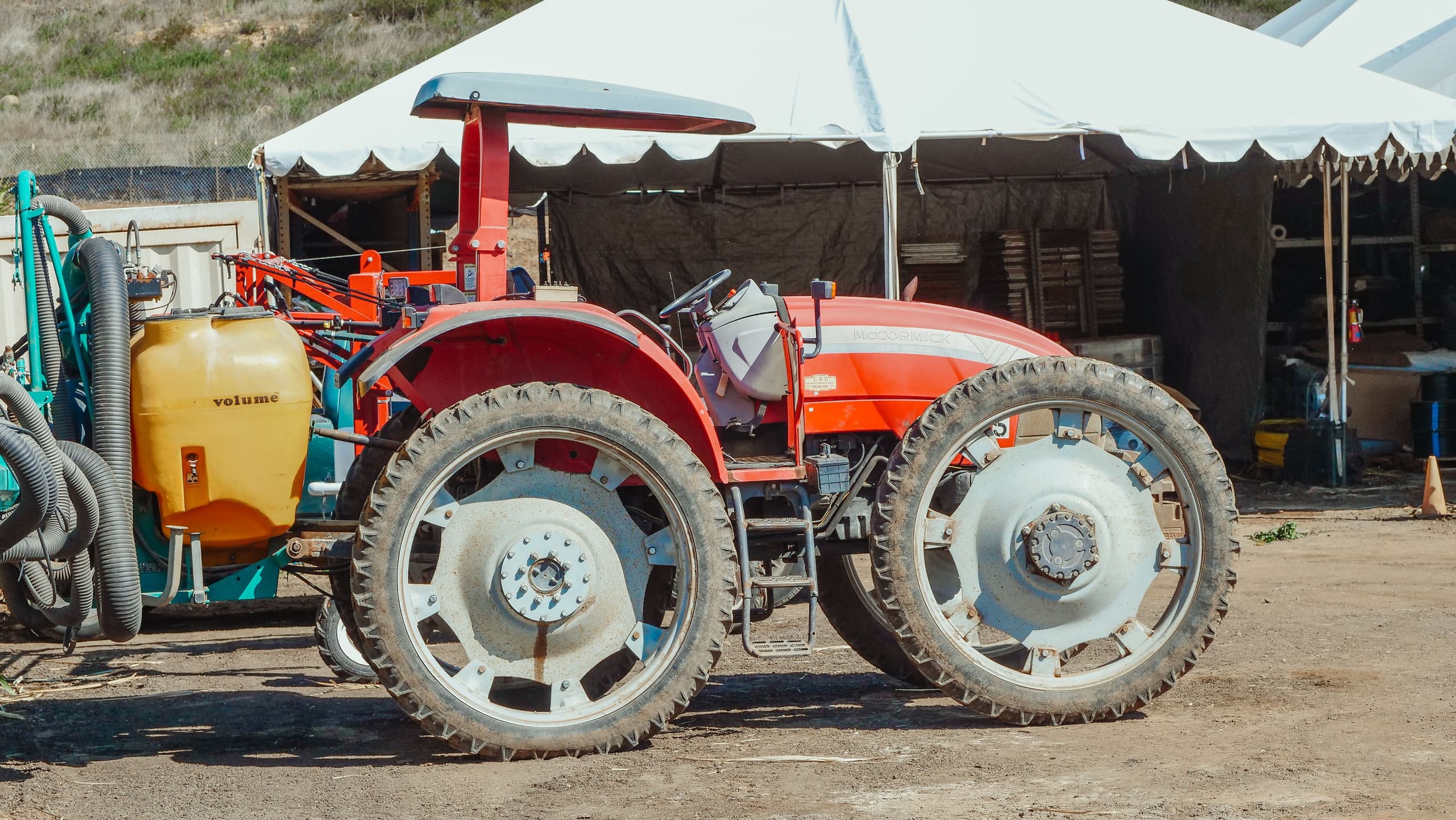
Why Tire Selection Matters for Port Machinery
Port operations demand equipment that can withstand relentless cycles, heavy loads, and harsh environments. While much attention is given to container handler tires and harbor machinery tires, the reality is that many ports also rely on agricultural tractors and utility vehicles for tasks like yard maintenance, material transport, and snow removal. Choosing the wrong tire—whether for a 50-ton reach stacker or a 100 HP tractor—can lead to premature wear, downtime, and safety risks. This guide compares agricultural and industrial tire options to help you make informed decisions for your fleet.
In this port machinery tire selection guide, we’ll examine three agricultural tire models from Vannova—the SH121/R-2, SH101/CR-1, and SH111/R-1—and contrast them with typical industrial port tires. We’ll analyze their construction, tread patterns, and performance characteristics to determine where each excels. By the end, you’ll understand how to balance port tire durability with operational needs, ensuring maximum uptime and cost efficiency.
Overview of Tire Options
Agricultural Tires: SH121/R-2, SH101/CR-1, and SH111/R-1
Agricultural tires are designed for soil traction, self-cleaning, and resistance to weathering. While not traditionally used on container handlers, they are common on utility tractors and support vehicles in ports. Here’s a breakdown of the three models:
- SH121/R-2: Suitable for paddy-to-dry conversion conditions and irrigation farming. Its deep tread pattern provides good traction and self-cleaning, and it offers excellent resistance to weathering and aging.
- SH101/CR-1: Converted from the R-1 wet paddy field pattern, this tire is suitable for paddy field conditions. It features a deep tread for traction and self-cleaning, plus excellent weathering and aging resistance.
- SH111/R-1: Designed for tractor drive wheels, this tire provides good traction, wear resistance, and self-cleaning ability. It is suitable for on-land operation and short-distance transportation, and also resists weathering and aging.
These tires are bias-ply construction, typical of agricultural applications, and are optimized for soft soil and low-speed operation.
Industrial Tires for Port Machinery
Industrial tires for port equipment—such as container handler tires and harbor machinery tires—are engineered for high-load, high-torque applications on concrete and asphalt. They typically feature:
- Radial or bias construction with reinforced sidewalls for heavy loads.
- Deep, wide tread patterns for traction on smooth surfaces and resistance to punctures.
- Cut- and chip-resistant compounds to withstand debris and repeated impacts.
- Heat-resistant designs for continuous operation.
While we won’t detail specific industrial models here, the comparison will highlight how agricultural tires stack up against these industrial counterparts.
Head-to-Head Comparison
To aid your port machinery tire selection guide, the table below compares key specifications and characteristics of the three agricultural tires alongside typical industrial port tires.
| Feature | SH121/R-2 | SH101/CR-1 | SH111/R-1 | Typical Industrial Port Tire |
|---|---|---|---|---|
| Primary Application | Paddy-to-dry conversion, irrigation farming | Paddy fields | Tractor drive wheels, on-land operation | Container handlers, reach stackers, forklifts |
| Construction | Bias-ply | Bias-ply | Bias-ply | Radial or bias-ply |
| Tread Pattern | Deep, self-cleaning | Deep, self-cleaning (R-1 derived) | Deep, self-cleaning | Deep, wide, with reinforced blocks |
| Traction | Good on soil | Good on wet soil | Good on soil and short-distance transport | Excellent on concrete/asphalt |
| Wear Resistance | Moderate | Moderate | Good | High |
| Self-Cleaning | Excellent | Excellent | Excellent | Good to excellent |
| Weathering/Aging Resistance | Excellent | Excellent | Excellent | Good |
| Load Capacity | Moderate | Moderate | Moderate | High |
| Speed Rating | Low (agricultural) | Low (agricultural) | Low to moderate | Moderate to high |
| Typical Cost | Low | Low | Low | High |
| Pros | Excellent self-cleaning, weather resistant, affordable | Excellent self-cleaning, weather resistant, affordable | Good wear resistance, self-cleaning, versatile | High load capacity, durability, optimized for hard surfaces |
| Cons | Not for high-load port equipment | Not for high-load port equipment | Limited speed and load | Higher cost, less self-cleaning on soil |
Performance Differences in Port Applications
Container Handler Tires
Container handlers, such as reach stackers and empty container handlers, operate on concrete yards and require tires that can carry immense loads (up to 50 tons) while resisting heat buildup and sidewall damage. Agricultural tires like the SH111/R-1 are not suitable for these applications due to their lower load capacity and bias-ply construction, which is less effective at dissipating heat under heavy loads. Industrial container handler tires feature radial construction, reinforced beads, and specialized compounds to handle the stress. For port tire durability in container handling, industrial tires are the clear choice.
Harbor Machinery Tires
Harbor machinery includes a diverse range of equipment: terminal tractors, utility vehicles, sweepers, and maintenance tractors. Here, agricultural tires can play a role. For example, the SH111/R-1 is well-suited for terminal tractors used for short-distance transport on paved surfaces, thanks to its good wear resistance and self-cleaning ability. The SH121/R-2 and SH101/CR-1, with their excellent weathering resistance, are ideal for utility vehicles that operate in mixed conditions, such as near docks where moisture and salt spray are present. However, for heavy-duty harbor machinery like straddle carriers, industrial tires are necessary.
Port Tire Durability
Port tire durability is influenced by factors such as load, speed, surface, and environmental conditions. Agricultural tires excel in resisting weathering and aging, which is beneficial in coastal ports with high humidity and salt exposure. Their self-cleaning properties also prevent mud and debris buildup, reducing vibration and extending tire life in utility applications. However, they lag in wear resistance and load capacity compared to industrial tires. For high-cycle, heavy-load operations, industrial tires offer superior durability, albeit at a higher initial cost.
Cost-Benefit Analysis
When selecting tires for port machinery, it’s essential to consider the total cost of ownership (TCO), not just the purchase price.
- Initial Cost: Agricultural tires (SH121/R-2, SH101/CR-1, SH111/R-1) are significantly cheaper than industrial port tires—often 30-50% less. For budget-conscious operations, this is a major advantage.
- Lifespan: Industrial tires typically last longer in high-stress applications, but agricultural tires can provide comparable service life in light-duty roles. For example, the SH111/R-1’s good wear resistance may yield 2,000-3,000 hours in terminal tractor service, while an industrial tire might last 4,000-5,000 hours but cost twice as much.
- Fuel Efficiency: Bias agricultural tires have higher rolling resistance than radial industrial tires, potentially increasing fuel consumption by 5-10% in transport applications. However, for low-speed utility work, the difference is negligible.
- Downtime: Agricultural tires’ excellent self-cleaning reduces downtime from mud accumulation, while industrial tires’ puncture resistance minimizes flats. The trade-off depends on your operating environment.
A cost-benefit analysis should weigh these factors against your specific use case. For light-duty support vehicles, agricultural tires often provide the best value. For heavy-duty container handlers, industrial tires are more cost-effective in the long run due to reduced downtime and longer life.
Recommendations by Use Case
Based on the comparison, here are our recommendations for your port machinery tire selection guide:
- Container Handlers (Reach Stackers, Empty Handlers): Use industrial radial tires specifically designed for container handler tires. Agricultural tires are not recommended due to insufficient load capacity and heat resistance.
- Terminal Tractors and Utility Vehicles: Consider the SH111/R-1 for on-land operation and short-distance transport. Its good wear resistance and self-cleaning make it a cost-effective choice for paved yard duties.
- Maintenance Tractors and Sweepers: The SH121/R-2 or SH101/CR-1 are ideal for mixed conditions, offering excellent weathering resistance and self-cleaning. These tires perform well in environments with mud, debris, and salt spray.
- Harbor Machinery in Coastal Areas: Prioritize tires with excellent weathering and aging resistance, such as all three agricultural models, to combat humidity and salt. Pair them with regular inspections to ensure safety.
- Heavy-Duty Harbor Machinery (Straddle Carriers, Large Forklifts): Opt for industrial harbor machinery tires with high load capacity and durability. The higher initial cost is justified by reduced downtime and extended service life.
In conclusion, while agricultural tires like the SH121/R-2, SH101/CR-1, and SH111/R-1 are not a one-size-fits-all solution for port machinery, they offer compelling benefits for light-duty applications. By understanding the strengths and limitations of each option, you can optimize your fleet’s performance and budget. For more tailored advice, consult with a tire specialist to match the right tire to your specific equipment and operating conditions.


