The High Cost of a Mismatched Tread Pattern
In the demanding world of off-the-road (OTR) operations, equipment uptime is money. Yet one of the most overlooked yet critical decisions is selecting the right OTR tire tread pattern for your specific jobsite. A pattern that excels in a rock quarry may fail prematurely in a muddy construction site, leading to frequent replacements, downtime, and soaring operational costs. This article provides a comprehensive OTR tread selection guide, helping you navigate the complexities of jobsite tire pattern choice. We’ll explore how to match tread patterns to your working environment, compare options, and implement best practices to keep your fleet rolling efficiently.
Why Tread Pattern Matters: Causes and Impact of Poor Selection
The tread pattern is the tire’s interface with the ground—it directly affects traction, wear rate, and durability. Using an inappropriate pattern can have cascading negative effects:
- Accelerated wear: A pattern designed for hard surfaces will wear out rapidly in abrasive conditions, while a soft-compound tire will chip and cut on sharp rocks.
- Reduced traction: In muddy or loose conditions, a shallow or tightly spaced tread will clog, leading to slip, increased fuel consumption, and safety hazards.
- Increased downtime: Frequent tire failures mean unplanned maintenance, disrupting project timelines and increasing labor costs.
- Higher cost per hour: Premature replacements and repairs inflate the total cost of ownership.
The root cause is often a lack of understanding of how tread design—pattern depth, void ratio, lug shape, and compound—interacts with ground conditions and machine load. Without a systematic approach, operators default to “one-size-fits-all” tires, which rarely deliver optimal performance.
Solution Overview: Best Practices for Jobsite Tire Pattern Choice
Selecting the right OTR tire tread pattern requires a structured evaluation of your jobsite. Follow these best practices:
- Assess ground conditions: Identify the primary surface (rock, mud, sand, hard-packed) and its variability. Consider moisture levels, abrasive content, and slope.
- Understand machine application: Match tire to axle load, torque, and steering requirements. Drive tires need deeper tread for traction; steer tires prioritize wear resistance.
- Prioritize tread depth and void ratio: Deep treads with high void ratios self-clean and provide traction in soft conditions; shallow, tight patterns resist wear on hard surfaces.
- Consider compound and construction: Radial vs. bias, cut-resistant vs. heat-resistant compounds—each has a place.
- Consult a tread pattern comparison: Use manufacturer data to compare tread designs against your jobsite profile.
Step-by-Step Implementation Guide
Step 1: Profile Your Jobsite
Create a detailed profile of your operating environment:
- Surface type: Is it primarily rock, gravel, dirt, mud, or sand? Estimate the percentage of each.
- Abrasiveness: High quartz content or sharp aggregates accelerate wear.
- Moisture: Wet, muddy conditions demand self-cleaning treads; dry, hard conditions favor wear-resistant patterns.
- Load and speed: Heavier loads and higher speeds generate more heat—choose compounds accordingly.
Step 2: Match Tread Pattern to Conditions
Use this quick-reference table to align pattern characteristics with jobsite demands:
| Jobsite Condition | Recommended Tread Characteristics | Example Pattern Type |
|---|---|---|
| Rock/Quarry (abrasive, hard) | Shallow to medium depth, tight lugs, cut-resistant compound | E3/L3 (standard) |
| Construction (mixed, muddy) | Deep tread, high void ratio, self-cleaning | E3/L3 with deep lugs |
| Sand/Soft Soil | Extra deep, wide lugs for flotation | L4/L5 |
| Underground Mining | High cut resistance, smooth tread for heat dissipation | L5S |
| Agricultural/Field | Deep tread for traction, self-cleaning | R-1/R-2 (e.g., SH111/R-1, SH121/R-2) |
Step 3: Evaluate Tire Construction and Compound
- Radial vs. Bias: Radials offer better fuel efficiency and longer tread life on hard surfaces; bias tires are more robust for severe conditions.
- Compound: Cut-resistant compounds for rocky areas; heat-resistant for high-speed hauling.
- Sidewall protection: Reinforced sidewalls for loaders and dozers in harsh environments.
Step 4: Conduct a Tread Pattern Comparison
Compare candidate tires side-by-side using key metrics:
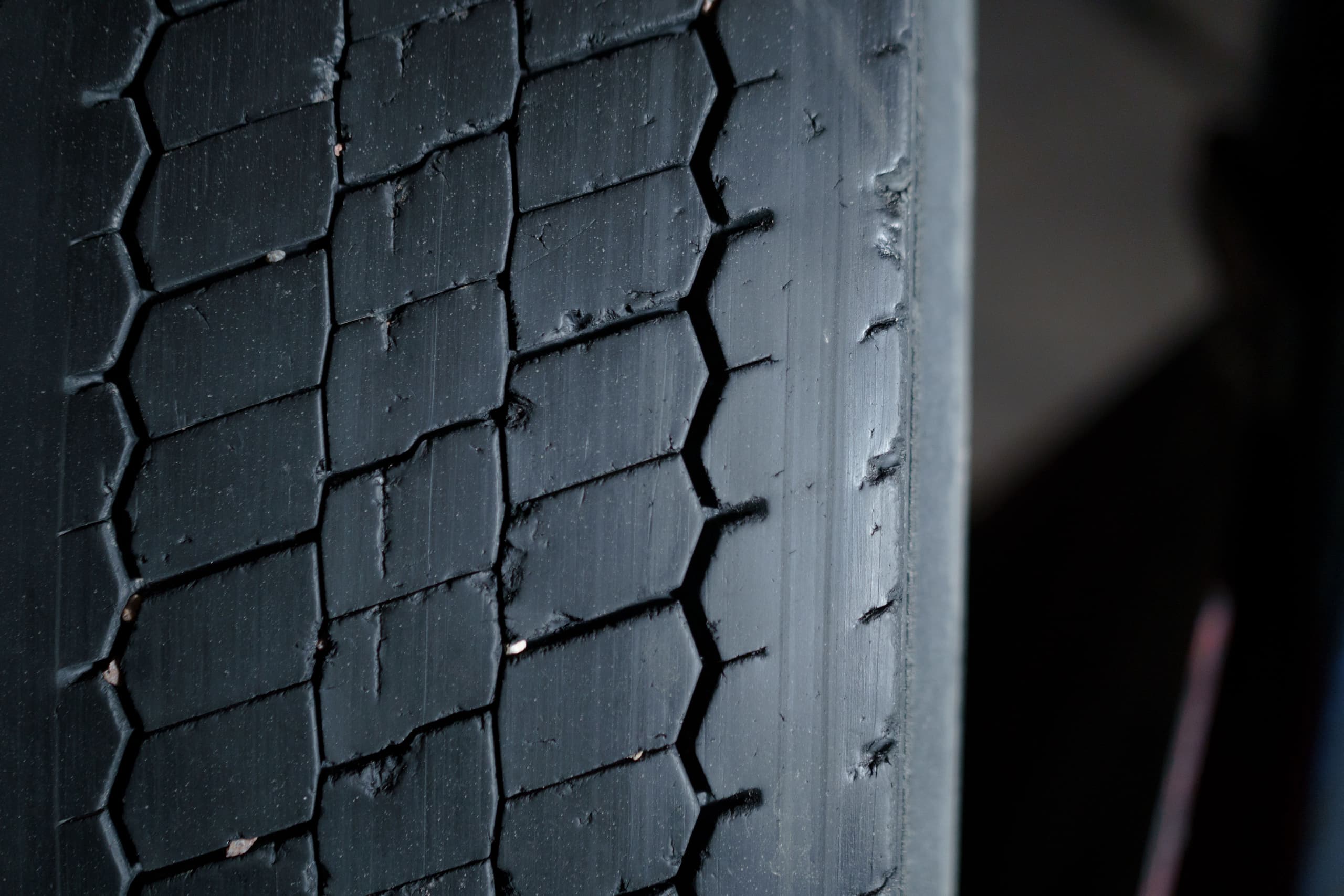
- Tread depth: Measure in millimeters; deeper is not always better—match to application.
- Void ratio: Higher void ratio (percentage of grooves) improves self-cleaning but reduces wear life on hard surfaces.
- Lug angle and shape: Angled lugs improve traction; straight lugs resist wear.
- Compound hardness: Softer compounds grip better but wear faster; harder compounds last longer but may crack.
Step 5: Test and Monitor
Pilot a set of tires on one machine and track performance:
- Tread wear rate: Measure remaining tread depth at regular intervals.
- Fuel consumption: Monitor changes—improper patterns increase rolling resistance.
- Incident reports: Log cuts, punctures, and failures.
- Operator feedback: Traction and stability are qualitative but valuable.
Real-World Examples: Case Studies
Case Study 1: Aggregate Quarry in Granite
A quarry in Georgia, USA, was using a standard E3/L3 tire on its loaders. Tire life averaged 4,000 hours, but sidewall cuts and uneven wear were common. After switching to a cut-resistant L4 pattern with reinforced sidewalls, tire life increased to 6,500 hours, reducing cost per hour by 35%. The deeper tread also improved traction on loose granite, reducing cycle times.
Case Study 2: Construction Site in Wet Climate
A large infrastructure project in Southeast Asia struggled with tire clogging in monsoon conditions. Excavators equipped with shallow-tread tires frequently got stuck. The solution: switch to an E3/L3 pattern with a high void ratio and self-cleaning lugs. Traction improved dramatically, and fuel consumption dropped by 12% due to reduced wheel spin.
Case Study 3: Agricultural Conversion
A farm converting from paddy to dry field needed tires that could handle both conditions. They chose the SH121/R-2, which features a deep tread pattern for traction and self-cleaning, plus excellent weathering resistance. The tires performed well in both wet and dry seasons, eliminating the need for seasonal tire changes.
Prevention and Long-Term Strategies
To sustain optimal tire performance, adopt these long-term practices:
- Regular inspections: Check tread depth, pressure, and damage weekly.
- Maintain proper inflation: Underinflation causes heat buildup and irregular wear; overinflation reduces traction.
- Rotate tires: Extend life by rotating between positions with different wear patterns.
- Keep a tire log: Track hours, wear, and incidents to refine selection over time.
- Partner with a knowledgeable supplier: Work with manufacturers like Vannova to access expert advice and tailored solutions.
- Train operators: Educate drivers on how tread patterns affect performance and how to report issues.
By following this OTR tread selection guide, you can make informed jobsite tire pattern choices that boost productivity, reduce costs, and enhance safety. Remember, the right tread pattern isn’t just a purchase—it’s a strategic investment in your operation’s efficiency.
For more information on agricultural and OTR tire solutions, explore Vannova’s range of products, including the SH101/CR-1 for paddy fields and the SH111/R-1 for tractor drive wheels.